

Introduction
Camille Monfort has become one of the internet’s most fascinating gothic mysteries. Her story describes a young French opera singer who arrived in Belém, Brazil, during the wealthy rubber-boom period. She was said to have pale skin, a powerful voice, and a habit of walking alone at night. Rich gentlemen admired her, while their wives feared her beauty and influence. Over time, people called her the “Amazonian Vampire”. Yet modern research suggests that this dramatic woman was not a proven historical celebrity. She was most likely a fictional character placed inside a real historical setting. This article explains the legend, the evidence, and why so many readers believed it.
Who Was Camille Monfort?
According to the popular tale, Camille Monfort was a beautiful French singer who performed in Belém near the end of the nineteenth century. Her voice was described as so emotional that some people fainted. She wore dark dresses, enjoyed late-night walks, and ignored social rules expected of women.
The legend claims the following:
- She came from a wealthy French family.
- She sang at theatres and private events.
- She attracted powerful men.
- She made society women jealous.
- She was linked to spirits, hypnosis, and blood-drinking rumours.
These details are exciting, but reliable historical records do not support them.
Was She a Real Historical Person?
The best available evidence suggests that Camille Monfort was a fictional character, not a documented opera singer. Researchers have not found trustworthy birth records, newspaper reports, theatre programmes, travel papers, or burial documents proving that she lived in Belém.
| Popular claim | Evidence-based finding |
| Famous French singer | No confirmed performance record |
| Lived in Belém | Her presence is unverified |
| Died in 1896 | No reliable death certificate |
| Her grave still survives | The connection is doubtful |
The story should be read as gothic fiction and folklore rather than a confirmed biography.
The Real Belém Behind the Story
Belém became wealthy during the Amazon rubber boom. Grand buildings, imported fashion, European music, and elegant social events shaped city life. The Theatro da Paz, which opened in 1878 and became an important centre for music and theatre, is often associated with Camille Monfort. A foreign performer appearing there sounds believable, even though this particular singer cannot be verified.
The story uses several real details:
- Wealth created by the rubber trade.
- European influence in Belém.
- Grand theatres and private parties.
- The Guajará waterfront.
- Local beliefs about spirits and strange events.
The fictional story feels more real when it takes place in actual locations.
How the Character Was Created
Evidence connects Camille Monfort with Após a Chuva da Tarde, a gothic novel by Bosco Chancen. The book combines vampires, Amazonian folklore, romance, old buildings, and the rubber-boom period. The story’s parts were copied online without clearly mentioning the novel, leading to confusion. Later pages added supposed facts about her family, education, travels, relationships, and death.
The legend spread because
- Fiction used real historical locations.
- Online posts removed the fictional context.
- Dramatic portraits were added.
- Websites copied information from one another.
- Repeated claims began to look like proof.
This phenomenon is a common way online myths grow.
Why Was She Called the Amazonian Vampire?
Camille Monfort received the nickname because her story includes classic gothic signs. She was described as pale, mysterious, beautiful, active at night, and connected with supernatural rumours. Some versions even claim that her singing could hypnotise listeners. The nickname may also reflect old fears about independent women. A woman who walked alone, attracted public attention, and controlled a stage could be judged as dangerous or improper.
| Gothic detail | Meaning in the story |
| Pale skin | Mystery and supernatural identity |
| Black clothing | Darkness and mourning |
| Night walks | Secrecy and danger |
| Powerful singing | Emotional control |
| Jealous women | Fear of beauty and independence |
The Grave Story Does Not Match
A popular version says Camille Monfort died during a cholera outbreak in 1896 and was buried at Soledade Cemetery in Belém. Historical research reports that the cemetery stopped receiving burials in 1880. That creates a clear conflict. A normal burial could not have taken place there sixteen years after new burials ended. The tomb shown in viral posts also has no verified connection with the singer. This date problem is one of the strongest signs that the online biography should not be treated as historical fact.
Are the Famous Portraits Authentic?
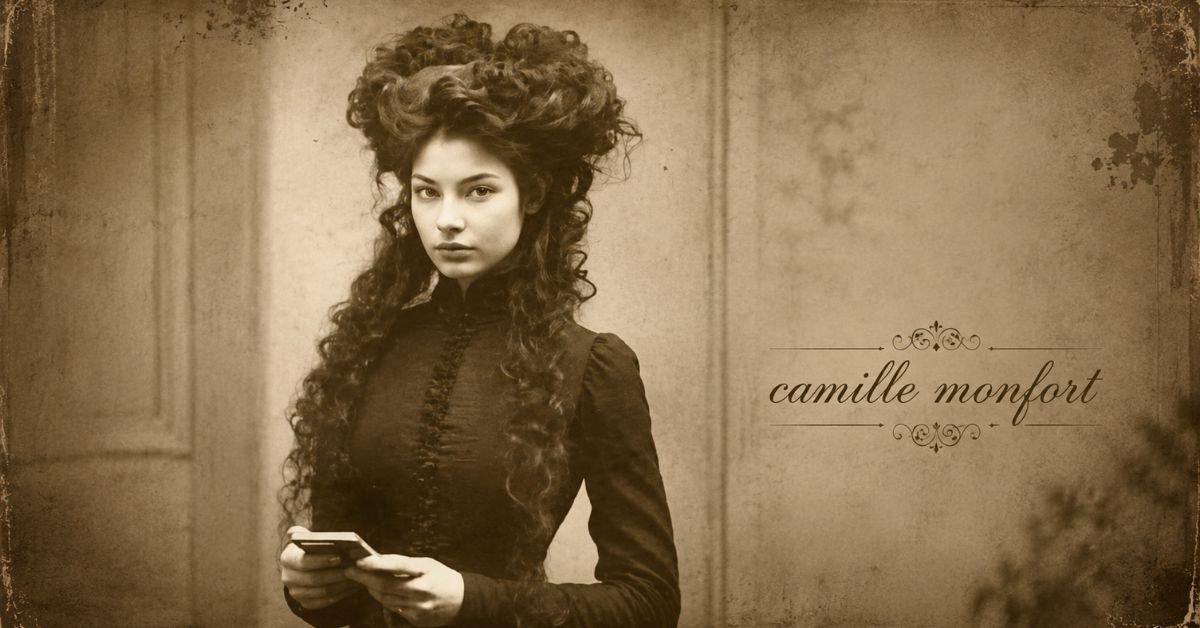
Old-looking images online are often presented as photographs of Camille Monfort. Faded colours, scratches, period clothing, and dramatic lighting can make a modern picture look historical. Researchers traced at least one widely shared portrait to modern artwork rather than an authenticated nineteenth-century photograph.
Before trusting a historical image
- Find its earliest known upload.
- Check whether a museum or archive owns it.
- Look for the artist’s name.
- Compare captions on different websites.
- Remember that a sepia effect does not prove age.
Images might give the impression that fiction is real, so it’s important to carefully verify their actual origins.
Why the Legend Spread Quickly
The story of Camille Monfort contains beauty, romance, jealousy, music, wealth, death, and supernatural mystery. These elements work well in dramatic social media posts, videos, and illustrated articles. Repetition also helped the story grow. When a claim appears on multiple websites, readers can assume that it has been verified by multiple independent sources. In reality, every page may be repeating one fictional account. The unusual mix of European vampire culture and Amazonian history also makes the tale memorable and easy to share.
What Readers Can Safely Believe
The most balanced view is that Camille Monfort is a fictional gothic figure inspired by the atmosphere and history of old Belém.
The available evidence supports these points:
- Belém and its rubber-boom history are real.
- Theatro da Paz is a genuine cultural landmark.
- The singer’s detailed biography remains unconfirmed.
- Vampire claims belong to folklore and fiction.
- Grave and portrait claims should be treated carefully.
Readers can enjoy the mystery while still respecting historical truth.
Why the Legend Still Matters
Camille Monfort remains interesting because her story shows how fiction can become “internet history”. It also shows how confident and independent women were sometimes described as dangerous, unnatural, or threatening. The character can be studied through gothic literature, Amazonian folklore, cultural storytelling, and online misinformation. The tale is not relevant because it proves vampires existed. It matters because it shows how real places, emotional writing, and repeated claims can create a believable myth.
FAQs
Was Camille Monfort a real person?
There is no compelling historical evidence that she was an opera singer in the nineteenth century.
Who created the Amazonian vampire story?
The character is connected with writer Bosco Chancen and the gothic novel Após a Chuva da Tarde.
Did she perform at Theatro da Paz?
The theatre is real, but no verified record confirms that she performed there.
Is her grave in Belém?
The claimed grave is unverified, and its date conflicts with the cemetery’s known history.
Why do people believe the story?
Real locations, copied articles, dramatic details, and old-looking images made the fictional tale appear authentic.
Conclusion
Camille Monfort is best understood as a fictional woman who became a powerful online legend. Her story uses the real beauty, wealth, and culture of Belém to build a convincing gothic world. The night walks, jealous admirers, vampire rumours, mysterious grave, and old portraits make the tale memorable, but they do not prove that she truly lived. Readers can enjoy the Amazonian Vampire as literature and folklore while separating creative details from documented history. Before sharing unusual historical claims, check original records, important dates, image sources, and academic research. This helpful practice keeps made-up stories from being recounted as fact.