


Introduction
Modern kitchens depend on speed, accuracy, and consistent results, especially when preparing cream, foam, desserts, and café-style toppings. Smartwhip has become a useful option for home cooks, bakers, cafés, and professional kitchens that want smoother textures and faster preparation. Instead of viewing it as a single product, it is better understood as a complete pressurized cream system that combines food-grade gas, a regulator, a hose, a compatible dispenser, chilled ingredients, and correct handling.
When these parts work together properly, the system can produce light whipped cream, soft coffee foam, mousse, dessert fillings, and savory espuma with greater control. However, good results still depend on temperature, recipe balance, pressure, shaking, cleaning, and equipment safety. This guide explains how the system works, how to choose the right setup, and how to solve common problems. It also provides practical advice for safer, cleaner, and more consistent kitchen use in 2026.
What Is Smartwhip?
Smartwhip is a pressurized cream system that uses food-grade nitrous oxide to aerate cream or another suitable liquid. Gas mixes with cold ingredients inside a sealed dispenser. When the valve opens, it expands and produces a light texture. The setup includes a gas cylinder, regulator, hose, compatible dispenser, and prepared recipe. A large cylinder cannot fix a leaking seal, warm cream, or blocked nozzle.
How the Cream System Works
Nitrous oxide dissolves into chilled cream inside the closed dispenser. As the cream leaves the nozzle, the gas expands into tiny bubbles. These bubbles make the mixture lighter without the sharp taste linked with carbon dioxide. Smartwhip works best when the liquid can hold those bubbles. Dairy cream needs enough fat, while plant-based recipes may require a stabilizer.
Four factors control the result:
- Cold temperature helps the liquid hold gas.
- Fat or stabilizer supports the foam.
- Correct pressure creates an even texture.
- Gentle shaking spreads gas through the liquid.
Too much shaking may make cream overly thick. Too little may leave it runny.
Main Parts of the Setup
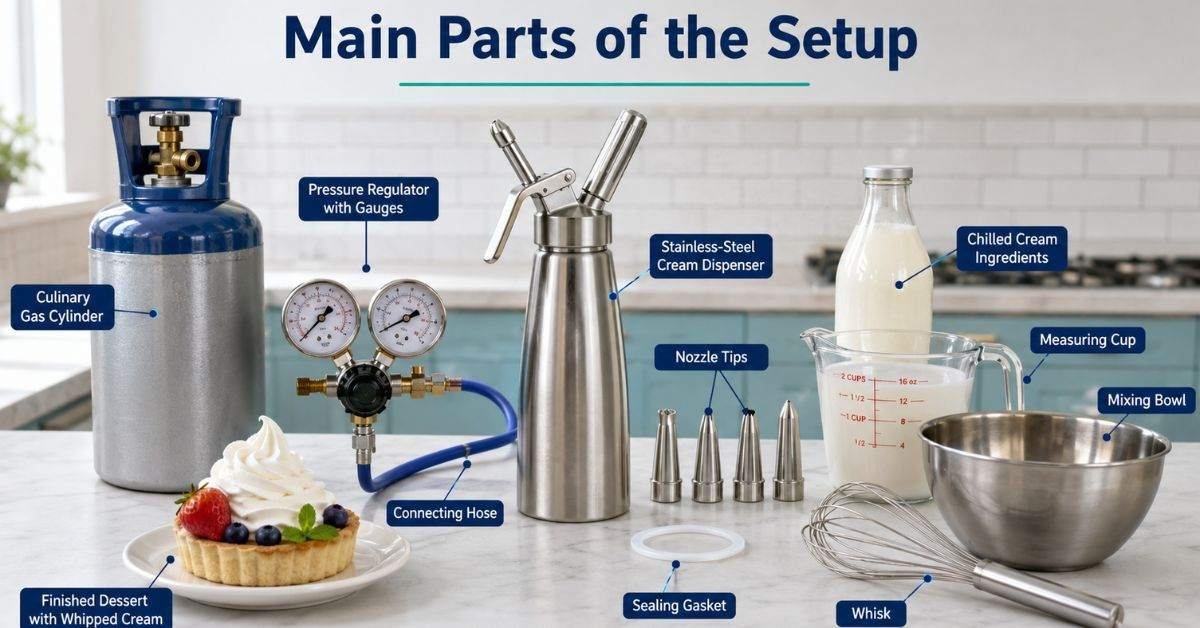
A complete Smartwhip setup needs compatible parts. Random fittings may cause leaks or unsafe pressure.
| Part | Main Job | What to Check |
| Gas cylinder | Stores culinary gas | Label and condition |
| Regulator | Controls gas flow | Pressure range and fitting |
| Hose | Carries gas | Tight connections |
| Dispenser | Holds the mixture | Seal, valve, and fill line |
| Nozzle | Shapes the foam | Clean opening |
Inspect the equipment before use. Replace worn seals, cracked parts, and damaged connectors.
Choosing the Right Method
The best option depends on serving volume, frequency, and the control you need.
| Method | Best For | Main Benefit | Limitation |
| Hand mixer | Small home batches | Low cost | Slower |
| Small charger | Occasional use | Compact | Frequent replacements |
| Smartwhip system | Busy kitchens | Fast and repeatable | Needs training |
| Aerosol cream | Quick serving | No preparation | Less control |
A regulated system suits busy cafés, while a mixer may handle occasional desserts.
Safe Preparation Steps
Handle pressure equipment carefully and read the instructions for every part.
Follow these steps
- Inspect the bottle, valve, gasket, hose, and regulator.
- Chill and strain the liquid.
- Never pass the maximum fill line.
- Add gas slowly using approved settings.
- Test a small amount first.
- Release pressure before opening.
Never heat, pierce, modify, or misuse a cylinder. Culinary nitrous oxide must not be inhaled.
How to Get a Better Texture
Good texture depends more on recipe balance than extra gas. If cream is thin, check temperature, fat, seals, and shaking.
For better results
- Use cold ingredients and a chilled dispenser.
- Dissolve sugar before filling.
- Remove seeds, pulp, and lumps.
- Shake only as much as needed.
- Serve in the recommended position.
Smartwhip can create different finishes. Coffee foam should be soft, while cake decoration needs a firmer shape. Change one factor at a time.
Useful Kitchen Applications
Smartwhip can prepare more than ordinary whipped cream. A suitable dispenser can produce the following:
- Coffee and hot chocolate toppings
- Chocolate or fruit mousse
- Cheesecake filling
- Savory herb foam
- Light sauces and cold espuma
Check whether the dispenser is cold-only or approved for hot recipes. Never heat a cold-only model.
Common Problems and Quick Fixes
Runny cream often means the mixture is warm, low in fat, or not shaken enough. Cream that is too stiff is usually over-shaken. A gas leak may come from a loose head or damaged gasket. Sputtering frequently indicates a pulp-containing combination or a clogged nozzle. Release pressure safely and cease using Smartwhip equipment if it leaks or appears damaged.
Cleaning and Storage
Clean the dispenser after every use. Dried cream can block the valve and create hygiene problems.
A useful routine is
- Empty and fully depressurize the dispenser.
- Remove washable parts as directed.
- Wash the bottle, tip, gasket, and nozzle.
- Brush narrow openings carefully.
- Dry all pieces before storage.
- Keep cylinders upright in a cool, dry place.
Never use knives or metal pins to clear a blocked valve.
Cost, Waste, and Responsible Use
Smartwhip may reduce small charger use, but total cost includes the regulator, hose, dispenser, seals, cleaning, and training. Choose the smallest setup that meets your workload to reduce waste, storage needs, and cost. Maintain reusable equipment and follow local recycling or return rules.
FAQs
Is Smartwhip only for whipped cream?
No. It can also make mousse, cold foam, sauces, and some dessert fillings.
Does the mixture need to be cold?
Yes. Cold liquid usually holds gas better and creates a more stable texture.
Can any dispenser be connected?
No. Use only compatible equipment made for the same pressure system.
Why does the cream come out runny?
It may be warm, low in fat, poorly sealed, or not shaken enough.
Is Smartwhip safe?
It is safe when used with approved culinary equipment and proper instructions.
Conclusion
Smartwhip can make cream preparation faster, cleaner, and more consistent, but the equipment alone does not guarantee perfect results. The final texture depends on several connected factors, including chilled ingredients, enough fat or stabilizer, controlled gas pressure, proper shaking, clean parts, and a well-sealed dispenser. Understanding these details helps users avoid runny cream, blocked nozzles, leaking gas, and overly thick foam.
The best approach is to begin with a simple tested recipe and make small adjustments after each batch. To replicate good outcomes, note the temperature, ingredient amounts, pressure level, and quantity of shakes. Always use compatible equipment, follow the manufacturer’s instructions, and release all pressure before opening or cleaning the dispenser. With responsible handling and regular maintenance, Smartwhip can support a wide range of drinks, desserts, sauces, and creative toppings while helping both home and professional kitchens improve speed, presentation, and portion control.